

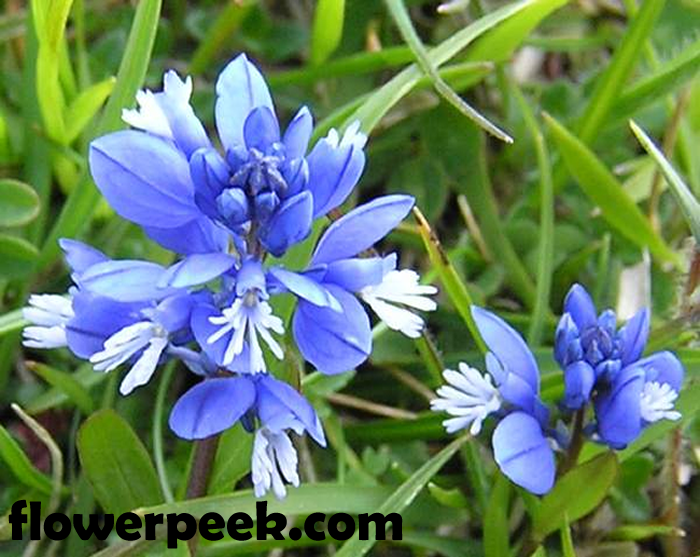
Milkworts flowers are wildflowers
and they are one of the stars of the show from summer to early fall in Europe.
Actually, Milkwort wildflowers are perennial herbs that really have a long
history as a medicinal plant. Continue reading to learn more about growing this
interesting plant.
Information about Milkwort Plant
Milkwort plant is commonly found in
grasslands, heaths and dunes. Milkwort plant is a familiar sight in the
landscape in Norway, Britain, Finland and other European countries. The plants
scientific designation is Polygala vulgaris. The Greek polugalon means “to make
much milk.” This describes the plant’s historic use as an aid to increase
lactation in new mothers. Milkwort plant has many medicinal and religious uses,
some of which persist today. Milkwort wildflowers are actually small plants,
only four to ten inches in height. The plant produces many long downy stems
that spring from a basal rosette. The flowers are generally deep to light blue
but may also be purple, white and pink. The flowers also have tiny petals
flanked by a pair of flattened sepals that resemble petals. The overall bloom
resembles a pea flower with its fused keel and tubular upper petals but is not
related to the family. The slender lance-shaped leaves are alternate along the
stem and disappear from the lower plant during bloom time. Common milkwort is
listed as endangered in Finland due to habitat loss. In its native regions,
Milkwort is found in pastures, meadows, banks, and hummocks.
Milkwort Flowers Care
Actually, growing milkwort flowers
from seed is one of the best methods of propagation. Milkwort seeds can be hard
to come by, but they can still be found online. Start the milkwort seeds
indoors before all danger of frost has passed or you can sow them into a
prepared bed after any frost is expected. Make sure you keep the seedlings
moderately moist and use a diluted plant food once the seedlings have four sets
of true leaves. Milkwort plants actually perform well in either full or partial
shade in well-drained soil. These plants are best in a mass of undulating wiry
stems and sky blue flowers. The plants can be cut back in late fall to within
six inches of the ground. Make sure you mulch around them to protect the root
zone from winter’s chill.
Uses of Milkwort Plant
The leaves of milkwort have been
known to be used as a tea substitute. The leaves are also added to green tea
for flavoring. Milkwort plant contains triterpenoid saponins, which have the capability to
break up mucous and treat respiratory ailments. Milkwort plant is also listed
as having diuretic properties and the ability to cause a recuperative sweat.
Milkwort plant was also once gathered for certain Christian processions.
Milkwort plant is an attractive addition to the perennial garden or in a
cottage herb plot in the landscape.
Post a Comment